A Robot Brain That Learns From Watching People — AGIBOT's GO-3, Explained Honestly
Nothing here is sponsored — no affiliate links on this page. This breaking article is not the daily buyer-intent post. Facts below come from the source listed at the end, checked 3 November 2026. We have not tested GO-3 hands-on, and nothing here is a hands-on finding.
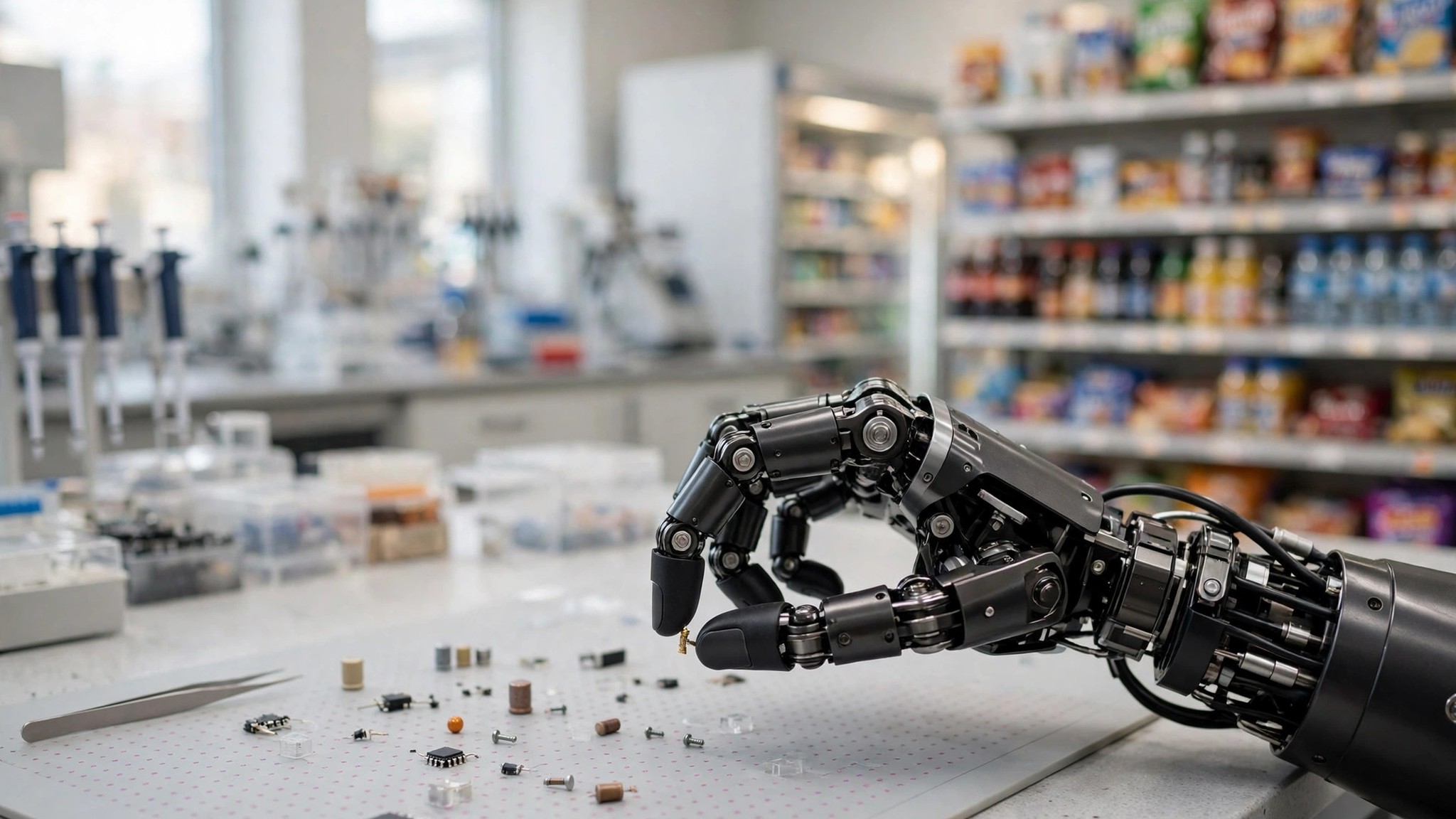
AGIBOT has unveiled GO-3 Preview, an embodied foundation model — in plain language, a robot brain — and the headline claim is a big one: first place on three embodied AI benchmarks, RoboDojo, RoboTwin and RoboColiseum, plus a promise to fully open-source the model by the end of 2026. If that promise holds, it matters. Most of the robot brains making headlines lately live behind an API or a closed product. A fully open-sourced embodied foundation model, one that other teams can actually download, study and build on, would be a different kind of news. But — and this is the honest part you need before the excitement — GO-3 Preview is a preview announcement from the vendor, not a release. There is no download link yet, no licence, no weights, no code repository, no pricing and no hardware you can buy or try today. So this article keeps both halves in view: what AGIBOT says GO-3 does, and what is still just a promise.
🔍 How we put this together
We verified the story against AGIBOT's press release via PRNewswire APAC on 3 November 2026, also syndicated via Korea Herald / Macau Business / Manila Times. We have not run GO-3 ourselves, so nothing here is a hands-on finding. Where a claim is the vendor's own — especially the benchmark rankings — we label it as exactly that, and where the release published no numbers, we quote none.What it is
GO-3 Preview is AGIBOT's third-generation embodied foundation model. "Embodied" means it is built to live inside a physical body — a robot — rather than inside a chat window. It takes in what the robot sees and is asked to do, and it produces actions: reaching, grasping, moving, manipulating objects in the real world.
AGIBOT describes its architecture as WRAM, short for World Reasoning Action Model. The idea is to unify three things that are usually handled separately: understanding the task, predicting what the world will look like next, and generating the action to take. Inside WRAM sit three core designs AGIBOT names in the announcement:
- CoAE (Control-Oriented Autoencoder) — compressing what the robot perceives into a form built for control, not just for description.
- SVP (single-step future-state prediction) — predicting the very next state of the world, one step at a time, rather than dreaming far ahead and hoping it stays accurate.
- KASO — selecting, from the model's predictions, the ones that stay consistent with the actions actually taken during training, so the robot's plans do not drift away from what it has really seen work.
You do not need to memorise those acronyms. What matters is the shape of the claim: a single model that understands, predicts and acts, instead of a pipeline of separate systems bolted together.
How it was trained — and what it claims to learn
For pre-training, AGIBOT says GO-3 learned from two kinds of data: human first-person videos — footage of people doing things, seen from their own point of view — and robot trajectories, recordings of robots actually moving through tasks. The pitch is that watching people do things, at scale, teaches a robot more general skills than robot-only data ever could, because there is simply far more human video in the world than robot experience.
From that, AGIBOT claims two kinds of adaptation that, if real, are the whole point of a foundation model for robots:
- Zero-shot task adaptation — handling a task it was not specifically trained on, without extra demonstrations.
- Few-shot adaptation — picking up a new task from only a small number of demonstrations. The example AGIBOT gives is LEGO assembly with limited demonstrations: show it a few times, and it generalises from there.
Both claims are AGIBOT's, from its own announcement. We have not tested them, and no independent verification is cited in the release.
The post-training loop: 100 robots, simulation, and a game of tabletop curling
After pre-training comes what AGIBOT calls Genie Evolver, its post-training system. It is described as a distributed hybrid-environment system that combines a fleet of 100 physical robots with physics simulation and world models — real robots and simulated ones, learning together.
The demonstrations AGIBOT cites are deliberately everyday and physical: tabletop curling, block extraction, and throwing a ball into a moving basket. The curling claim is the eye-catching one: after a few hours of practice, GO-3 is claimed to have achieved a higher win rate than typical human players. That is a vendor claim, not an independently verified result, and "typical human players" is AGIBOT's own framing — but it tells you what kind of learning AGIBOT wants you to picture: not a robot repeating a memorised motion, but one that improves at a physical skill through practice.
After deployment: a robot that keeps improving in a real shop
The third stage is post-deployment, and it is where AGIBOT's language gets boldest. GO-3 comes with Genie Master, an embodied agent framework built around EEP, the Embodied Execution Protocol, which covers capabilities, guidance, feedback and continuity — roughly, what the robot can do, how it is instructed, how it learns from what happens, and how it keeps going across tasks.
The demonstration here is a Genie G2 robot in a real convenience store, claimed to improve across tasks without human demonstrations or manual tuning. AGIBOT calls this Physical RSI — Recursive Self-Improvement in the Physical World: a robot that does not just run a fixed policy after deployment, but gets better at its job by doing it.
That is, if it works as described, the most consequential claim in the whole announcement. A robot that improves in a real shop, without a human retraining it by hand, is a different proposition from a robot that performs well in a lab demo. It is also the claim that most needs independent checking, because it is the hardest to verify from a press release alone.
Where GO-3 sits in AGIBOT's own lineage
- GO-1, built on the ViLLA framework.
- GO-2, which introduced action chain-of-thought — the robot reasoning through its actions step by step.
- GO-3 Preview, which extends scaling across the full lifecycle: pre-training, post-training and post-deployment together.
AGIBOT calls this "full-lifecycle scaling" — the argument that progress in embodied AI does not come from scaling just one stage, but from scaling all three, from how the model is first trained to how it keeps learning once it is out in the world.
Who it matters for
- Robotics developers and researchers. If GO-3 is fully open-sourced by the end of 2026 as promised, it would be a shared foundation to build on and compare against — and the WRAM architecture, the human-video pre-training mix, and the full-lifecycle scaling claim are all worth studying, whether or not the benchmark claims hold up independently.
- Teams building physical AI products. The convenience-store demonstration, and the Physical RSI claim behind it, point at robots that keep improving after deployment rather than freezing at shipment. That is the direction to watch, and the claim to verify, before betting a product on it.
- Developers tracking open models. The open-source promise is the date to put in your diary. Until the weights, code and licence actually appear, GO-3 is a story to track, not a tool to use.
- Anyone curious about where AI goes next. Chatbots answered questions; agents used tools; embodied models move things in the real world. GO-3 is a clear sign of where the industry's attention is heading, even before any of its claims are independently confirmed.
Limits — stated plainly
- This is a PREVIEW announcement from the vendor. GO-3 Preview is announced, not released. Treat every capability claim in this article as AGIBOT's claim, not as an established fact.
- The benchmark claims are AGIBOT's own. First place on RoboDojo, RoboTwin and RoboColiseum is claimed in AGIBOT's release. No independent verification is cited in the release, and no scores or numbers were published in the release text we have — so we are not quoting any. Do not repeat a score for GO-3 that you have not seen from an independent source.
- It is NOT open-source yet. The full open-source release is promised by the end of 2026. It has not happened. Do not describe GO-3 as downloadable, open-source today, or available to try.
- No download link, licence, model weights, code repository, pricing or hardware availability was given in the release. If someone offers you a "GO-3 download" today, it is not coming from this announcement.
- We have NOT tested GO-3 hands-on. No robot running GO-3 is available to try today, and nothing in this article is a hands-on finding.
- The demonstrations are AGIBOT's chosen examples. Tabletop curling, block extraction, throwing a ball into a moving basket, and the convenience-store G2 robot are the cases AGIBOT chose to show. They are not an independent test suite.
The bottom line is a two-part sentence, and both parts matter. GO-3 points at a future where a robot's brain is open, general, and still learning after it leaves the lab — and the architecture story, from human-video training to a 100-robot post-training fleet to in-store self-improvement, shows how AGIBOT thinks that future is built. But today it is a preview announcement with vendor claims, no scores to quote, and nothing to download. Watch the end-of-2026 open-source promise, and judge GO-3 then by what actually ships.
Source: AGIBOT press release via PRNewswire APAC, 3 November 2026: "AGIBOT Unveils GO-3 Preview, Takes Top Spot on Three Embodied AI Benchmarks" (PRNewswire), also syndicated via Korea Herald / Macau Business / Manila Times. No hands-on testing was performed for this article, and no benchmark scores, prices, download links or availability beyond the release are claimed.