NVIDIA Just Launched GR00T 2 and Isaac Lab 3.0 — One Demo to Teach a Robot a New Skill
Nothing here is sponsored — no affiliate links on this page. This breaking article is not the daily buyer-intent post. Facts below come from the sources listed at the end, checked 9 November 2026. We have not tested this hands-on, and nothing here is a hands-on finding.
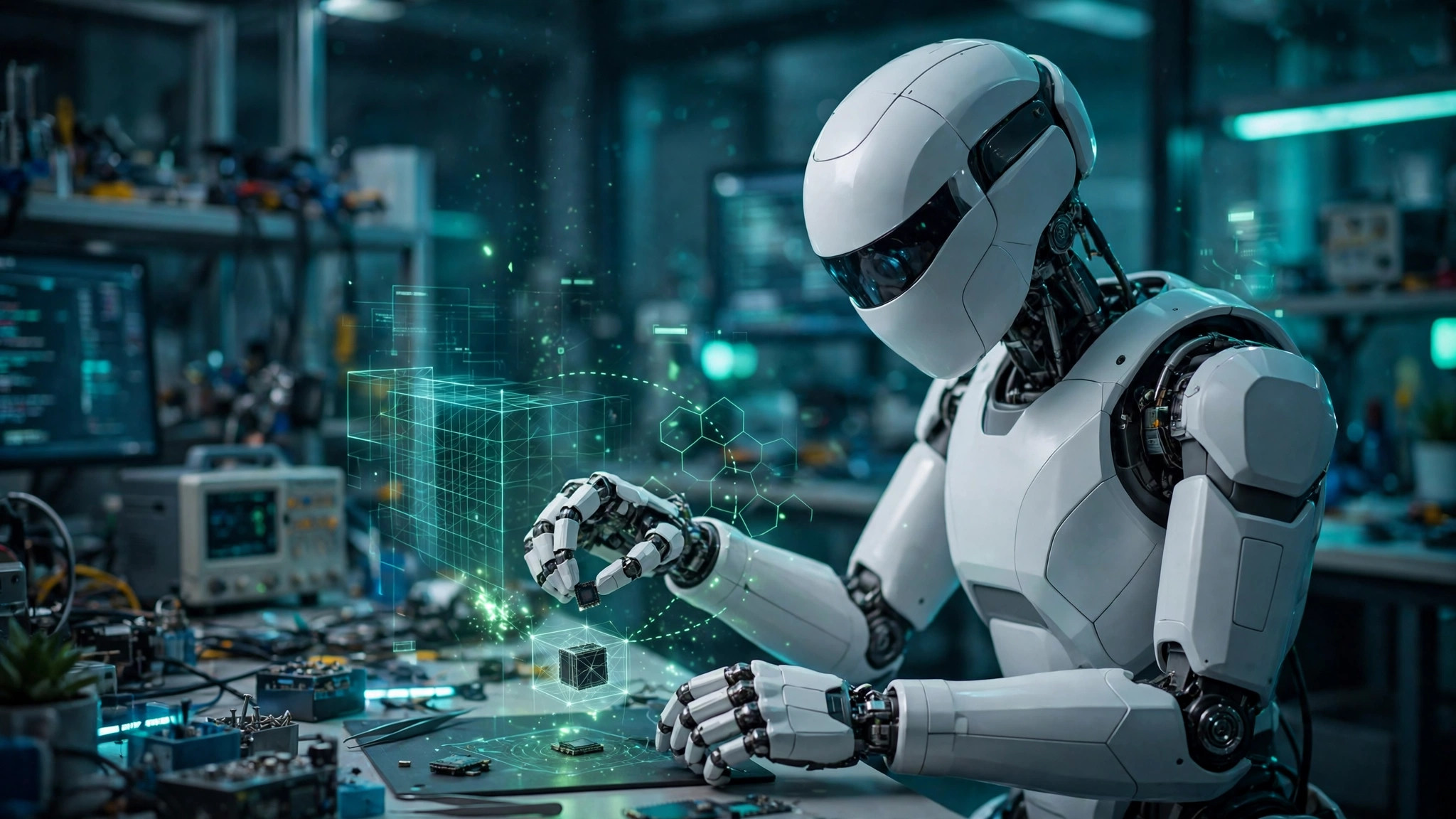
NVIDIA announced GR00T 2 and Isaac Lab 3.0 today, November 9, 2026, at the Conference on Robot Learning (CoRL) in Austin, Texas. GR00T 2 is the updated version of NVIDIA's open frontier world action model for humanoid robots, and Isaac Lab 3.0 is the latest release of its open-source robot learning framework. The headline number, from NVIDIA: a robot running GR00T 2 succeeded at a task 71% of the time on average after watching a single human demonstration of it — and 95% of the time after five.
I have not run or tested any of this — nobody outside NVIDIA and its partners had access before today — and this article is built from NVIDIA's own announcement and The Robot Report's coverage, both checked 9 November 2026. Every benchmark and success figure below is NVIDIA's own claim, and I label it as such, because a launch-day blog post is a demo, not an independent result.
🔍 How we put this together
We verified the story against NVIDIA's blog post ("Practice Makes Precise: At CoRL, NVIDIA and Partners Reveal How Robots Rehearse Delicate Work in Simulation") and The Robot Report's coverage ("NVIDIA launches GR00T 2 and Isaac Lab 3.0 at CoRL"), both 9 November 2026. We have not used this hands-on, so nothing here is a hands-on finding. Where a figure comes from NVIDIA — most importantly the 71%/95% success rates, the benchmark rankings and the 2.5x training throughput — we say so plainly instead of presenting it as an independent result.What actually changed
GR00T 2 is a world action model, which is a different kind of robot brain from the chatbots most people picture when they hear "AI model." It watches its surroundings, predicts how its actions will change the environment, and then carries out multi-step tasks that need a fine touch — aligning gears, connecting cables, assembling small parts. It is built on NVIDIA Cosmos and trained on a mix of robot data and human data, including 100,000 hours of NVIDIA's open-source egocentric (first-person) video.
The part that matters most for anyone building robots is how little demonstration it needs. NVIDIA's figures, all its own:
- Out of the box: GR00T 2 completed 40 of 50 evaluated tasks at least once with no task-specific demonstrations at all.
- One demo: 71% average success across 50 tasks with just one demonstration per task.
- Five demos: 95% average success with five demonstrations per task.
- Skill transfer: it learns from human demonstrations and transfers skills between different robot bodies without needing robot demonstrations.
That last point is the quiet one. If it holds up outside NVIDIA's tests, a developer could teach a skill by doing it themselves on camera instead of driving a robot through the same motion dozens of times — and then move that skill to a different robot body. That is the difference between robot training as a specialised lab job and robot training as something a small team can do.
NVIDIA also says GR00T 2 ranks among the top three models across all vision-language-action (VLA) and world action model categories on the RoboCasa365, RoboLab, RoboDojo and MolmoSpaces benchmarks, with multiple leaderboard wins. Again, its claim — these are NVIDIA's chosen benchmarks, run by NVIDIA.
AI agents get a direct role too: agents can use GR00T 2's API and supporting tools to run skills in sequence and recover from errors, so a robot can chain several skills into one job and keep going when something goes wrong. That is the "agentic robotics" idea NVIDIA kept returning to at CoRL — agents that write interpretable robot programs from individual skills, which engineers can review before the robot runs them.
Who is already using it
The partner list is long, and it is the strongest signal in the announcement that this is not a research-only release. RLWRLD, Skild AI, Flexion, Ambi Robotics, Bosch Research, Dexmate, Dyna Robotics, FieldAI, Noitom Robotics, Siemens, UC Berkeley, Walden Robotics and the University of Washington are all working with the new technology, according to NVIDIA.
The concrete uses are more telling than the names:
- Foxconn is applying GR00T 2 to factory automation for server manufacturing. Siemens is evaluating it across industrial use cases. Nexuni is testing it for robotic laundry handling.
- MicroAGI is using GR00T 2, post-trained through reinforcement learning, to perform Ethernet cable swapping with a YAM robotic arm — automating the creation and calibration of its simulation environments with Isaac Lab 3.0 and Newton.
Foxconn putting a model on a server production line is the kind of detail that separates a conference demo from a deployment plan. It does not prove the model works at scale — NVIDIA chose the example, and chose what to show — but it does mean someone with a real factory is betting time on it.
What Isaac Lab 3.0 gives developers
If GR00T 2 is the brain, Isaac Lab 3.0 is the gym where it trains. It is the latest release of NVIDIA's open-source robot learning framework, and the upgrade is about the training loop itself:
- Agents set up training environments quickly, using simulation-ready assets, instead of hand-building each scene.
- You can switch between NVIDIA PhysX and Newton physics solvers, and choose renderers for perception-based training.
- A new reinforcement post-training library applies to foundation models such as GR00T, so a pretrained model can be refined with reinforcement learning after the fact.
The physics matters more than it sounds. Tighter integration with Newton, the open-source physics engine, lets Isaac Lab model deformable objects such as cables and cloth, along with complex articulated systems such as robotic hands with many interacting joints. That is the difference between a simulation where a robot picks up a rigid box and one where it handles a cable — and cables are exactly the kind of thing real robots keep failing at.
NVIDIA's throughput claim: in a vision-based dexterous manipulation benchmark, Isaac Lab 3.0 with Newton achieved up to 2.5x the training throughput of Isaac Lab 2.3 with PhysX. Its claim, its benchmark — but if it is anywhere near right, training runs that took a week now take days.
Skild AI also announced STEEL (Scalable Throughput-optimized Engine for Embodied Learning) at CoRL, a new rigid-body physics solver built on Newton to accelerate robot training with Isaac Lab. And around the edges of the announcement: a new open Video to Data workflow that turns human video into simulated robot demonstrations, the EgoHand open model that reconstructs 3D hand motion (over 40,000 Hugging Face downloads in the two weeks since launch, according to NVIDIA), and two new open benchmarks — DexBench from RLWRLD and NVIDIA, with 15 tasks across retail, logistics, manufacturing and hospitality, and VABAR from UC Berkeley and NVIDIA, evaluating robots across six industrial tasks.
The catch, stated plainly
- Every number here is NVIDIA's own. The 71% and 95% success rates, the top-three benchmark rankings, the 2.5x training throughput — all measured by NVIDIA, on NVIDIA's chosen tasks and benchmarks, in controlled conditions. None of it has been independently reproduced yet. Treat the figures as a claim about what is possible, not a measurement of what you will get.
- Controlled tests are not factory floors. 50 evaluated tasks in a test setup is a long way from a robot handling the variation of a real production line — different lighting, worn parts, a cable that falls differently every time. The Foxconn and Siemens work is the test that matters, and it is only just starting.
- Availability is not spelled out. The announcement introduces GR00T 2 and Isaac Lab 3.0 at CoRL but does not give a general-availability date or a simple install path in the blog post itself. Isaac Lab 3.0 is open source and linked from NVIDIA's GitHub; for GR00T 2, check NVIDIA's research page before assuming you can download it today.
- "Open" needs a check, not a cheer. NVIDIA calls GR00T 2 an open frontier model. Open can mean many things — weights, code, licence terms, commercial use — and the announcement does not settle the details. Read the licence before building a product on it.
- This is a model plus a training stack, not a robot you can buy. GR00T 2 needs a robot body, and Isaac Lab 3.0 needs GPU compute to train on. The announcement lowers the data cost of teaching a robot; it does not remove the hardware cost of owning one.
The bottom line
This is two announcements that only make sense together. GR00T 2 says a humanoid robot can learn a dexterous skill from one human demonstration. Isaac Lab 3.0 says you can train and refine that skill in simulation, fast enough to be practical, with physics good enough to handle cables and cloth. One without the other would be a demo; together they are a workflow — watch a human do it, simulate it thousands of times, run it on the robot.
The honest test is still ahead: whether the one-demo success rates survive contact with real factories, and whether the "open" model is open in the way developers actually need. But the direction is clear. Robot training is moving from "drive the robot through the motion a hundred times" to "show it once, then let simulation do the rest" — and NVIDIA just shipped the two pieces that make that sentence true, at least on paper.
If you work in robotics, the question to ask is not whether GR00T 2 is impressive — it is whether the one-demo claim holds on your task, with your robot, in your environment. That is the experiment worth running first.
Sources: NVIDIA Blog — "Practice Makes Precise: At CoRL, NVIDIA and Partners Reveal How Robots Rehearse Delicate Work in Simulation" (https://blogs.nvidia.com/blog/robotics-simulation-advancements-corl/), 9 November 2026; The Robot Report — "NVIDIA launches GR00T 2 and Isaac Lab 3.0 at CoRL" (https://www.therobotreport.com/nvidia-launches-gr00t-2-isaac-lab-3-0-corl/), 9 November 2026. All benchmark and success figures are NVIDIA's own claims, stated as such. No hands-on testing was performed for this article. This breaking article is not the daily buyer-intent post, and it contains no affiliate links.