ChatGPT Images 2.6 Turns ChatGPT Into a GIF Maker — Explained Honestly
Nothing here is sponsored — no affiliate links on this page. This breaking article is not the daily buyer-intent post. Facts below come from the sources listed at the end, checked 5 November 2026. We have not tested ChatGPT Images 2.6 hands-on, and nothing here is a hands-on finding.
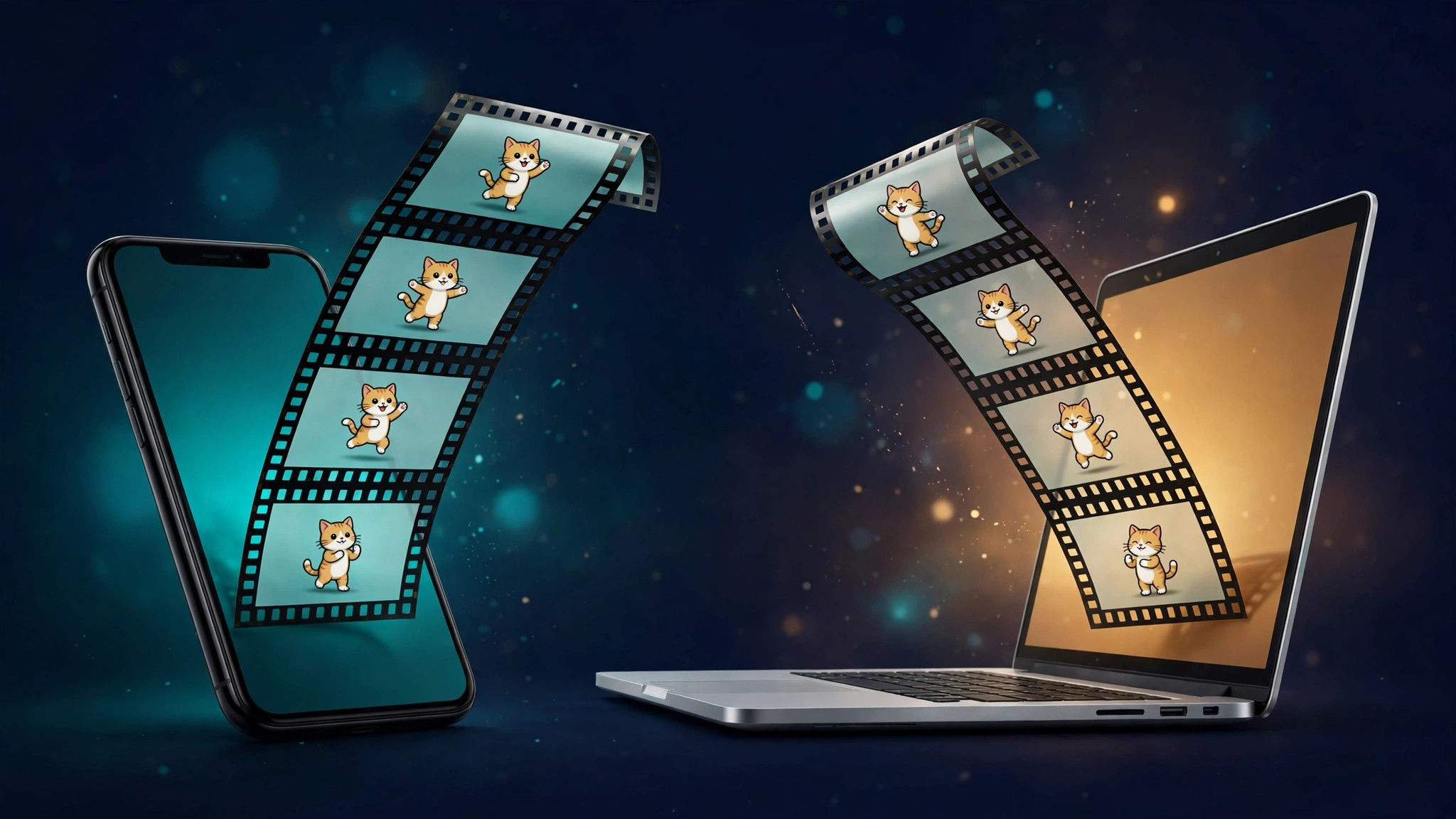
OpenAI has turned its image model into a GIF maker. On 4 November 2026, OpenAI announced ChatGPT Images 2.6, and the headline feature is the one most people will actually try first: native animated GIF generation inside ChatGPT, from a text prompt or an uploaded photo. You can adjust the playback speed, edit individual frames, and share the result on repeat — OpenAI's own example is a dancing cat.
That is a real, usable change, and it is also a narrow one. A GIF is short looping motion, not a video. The rest of this article separates what is new, what is claimed, and what is still unclear — because the announcement, the coverage and OpenAI's own pricing page do not yet fully agree with each other.
🔍 How we put this together
We verified the story against the 4–5 November 2026 coverage — the OpenAI Developer Community announcement (4 November 2026), The Verge (via Unite.AI), AlphaSignal, ETV Bharat, Times of India and ShiftDelete — keeping every speed, scale and pricing claim labelled as claimed or reported, and every rollout caveat stated plainly. We have not run ChatGPT Images 2.6 ourselves, so nothing here is a hands-on finding. Where the announcement gives no number or date, we say so.What it is
ChatGPT Images 2.6 is the next version of the image model inside ChatGPT and Codex. It is available, according to OpenAI, across all tiers including free, on web, desktop and mobile. Alongside still images, it now generates animated GIFs natively: describe the motion in words, or upload a photo and ask it to move.
In practice, that means three things OpenAI highlights. First, you prompt for motion the way you previously prompted for a still — no separate animation tool, no video editor in between. Second, you can tune the result: playback speed, and edits to individual frames, so a loop that is almost right can be fixed without regenerating the whole thing. Third, the output is built to be shared on repeat, which is the whole point of a GIF: a reaction, a mascot doing its thing, a tiny moment that loops.
One important qualification, stated plainly: the GIF rollout is gradual. Some accounts may not see GIF generation yet. If you open ChatGPT today and the option is not there, that does not mean the announcement was wrong — it means the rollout has not reached you yet. No date for full availability has been given in the sources for this article.
GIFs in practice
The use cases OpenAI cites are deliberately small-scale, and that is reassuring rather than disappointing. Social reaction images. Brand mascots. Product micro-interactions — the little animated moments inside an app or a page. Animated storyboards. The startup Town, cited by OpenAI, is animating a loading character.
Those examples tell you the honest scope of the feature. This is for moments that loop: a character waving, a mascot bouncing, a reaction that lands in a chat. It is not a video replacement, and it should not be judged as one. A GIF has no soundtrack, no scene changes, no narrative arc — it has one motion, repeated. Judged on those terms, it is a genuinely useful addition to a chatbot that already makes images. Judged as a video generator, it will disappoint, but that was never the claim.
For developers and creators, the practical question is workflow, not novelty. A GIF you can generate, tweak frame by frame, and drop straight into a chat, a social post or a product is a faster loop than generating a still, taking it to another tool, animating it there, and exporting it back. Whether the quality holds up on real prompts — faces, hands, brand characters, text inside the image — is something only hands-on use will show, and no hands-on testing was performed for this article.
The two API models: Flare vs Sunburst
Alongside the ChatGPT feature, OpenAI released two new API models under the Images 2.6 name, and the split between them is the most useful detail for developers choosing between them:
- GPT-Image-2.6 Flare — the speed option. OpenAI positions Flare for latency-sensitive work: fast generation where waiting matters more than squeezing out the last bit of quality.
- GPT-Image-2.6 Sunburst — the quality option. OpenAI positions Sunburst for quality and edit consistency: results that hold together better across edits, where you care more about the output looking right than about getting it instantly.
That is a sensible split, and it mirrors how developers actually use image APIs: some calls are bulk, iterative and speed-bound; others are the final asset, where consistency across revisions matters. What the sources for this article do not yet give is independent, head-to-head evidence for how large the gap between Flare and Sunburst is in practice — the positioning is OpenAI's, and this article reports it as such.
Reference images: save once, reuse everywhere
The second feature worth attention is reusable reference images. Save a character, a pet or a person once, then reuse that reference across prompts instead of re-uploading the same photo every time.
Anyone who has tried to keep a character consistent across AI-generated images will recognise why this matters. Re-uploading a photo each time is friction, and it is also a source of drift: each upload is a fresh interpretation, and the character slowly changes. A saved reference is OpenAI's answer to that problem — one stored likeness, reused consistently.
Two things to note honestly. First, consistency is claimed, not yet independently measured — how well a saved reference survives ten different prompts, styles and scenes is a hands-on question, and this article has no hands-on answer. Second, a feature that stores a person's likeness for reuse deserves a careful look at its controls — what is stored, how it is deleted, and who can reuse it — and none of those details are covered in the sources for this article. Do not assume them; check OpenAI's own documentation before building anything around saved references of real people.
Speed and scale — with the caveats attached
OpenAI says Images 2.6 generates 50% faster than Images 2.5. That is OpenAI's claim, and it needs a label next to it, because the numbers underneath it do not all point the same way.
The specific benchmark figure reported in the coverage is narrower: Flare went from 7.08 seconds to 4.84 seconds in that benchmark — about 32% faster, not 50%. One dev.to summary of the announcement noted plainly that the 50% figure is not consistently substantiated. So this article reports both numbers and labels them correctly: 50% faster is OpenAI's headline claim; ~32% is what the reported Flare benchmark shows. Do not quote the 50% as an independently verified result, because it is not one.
The scale figure is also OpenAI's, and it is large either way: more than 4 billion images per week across ChatGPT and the API, up from 3 billion in September 2026. That is a self-reported usage figure, not an audited one, but the direction is plausible — image generation inside a chatbot used by hundreds of millions of people adds up fast, and GIFs will only push that number higher.
Pricing — reported, not yet on the official page
Pricing is where this article is deliberately careful. ETV Bharat reports API input/output cost of $8 / $30 per 1 million tokens for Images 2.6. That figure is reported, not confirmed.
The caveat matters: as of Wednesday evening, OpenAI's public pricing page still listed only the 2.5 versions. Until the 2.6 models appear on OpenAI's own pricing page, treat $8 / $30 per million tokens as a reported figure from coverage, not as official pricing. If you are budgeting an API integration, wait for the official page — or confirm the price in your own API account — before committing to that number. No other price is stated here, because no other price has been reliably reported in the sources for this article.
Who it matters for
- ChatGPT users who post, chat and share. GIFs are the most immediately usable part of this release. If your account has the rollout, a reaction GIF or a looping mascot is now a prompt away — with the gradual-rollout caveat above.
- Developers building with the image API. Flare versus Sunburst is a real choice: speed for iterative work, quality and edit consistency for final assets. Wait for official pricing before budgeting, and test consistency yourself before relying on it.
- Brands, creators and small teams. A consistent mascot or character, reusable across posts via saved references, is the most commercially interesting part of this release — if the consistency holds up in practice.
- Product teams. Loading animations, micro-interactions and animated storyboards are now generatable inside a tool many teams already use, rather than requiring a separate motion pipeline. The Town example — an animated loading character — is the shape of this use case.
- Anyone tracking the image-model race. Native motion, saved references and a speed/quality model split are all directions the whole field is moving in. This release is OpenAI catching those threads together in one version, not inventing any single one of them.
The limits — stated plainly
- Short looping motion is not video. GIFs loop one moment. No soundtrack, no scenes, no story. Do not judge this release as a video generator.
- The GIF rollout is gradual. Some accounts may not see it yet, and no full-availability date has been given in the sources for this article.
- 50% faster is OpenAI's claim, not an independently verified result. The reported Flare benchmark shows 7.08s → 4.84s, about 32% faster. One dev.to summary noted the 50% figure is not consistently substantiated.
- Pricing is reported, not official. $8 / $30 per 1 million tokens comes from ETV Bharat's coverage; OpenAI's public pricing page still listed only the 2.5 versions as of Wednesday evening. Confirm before budgeting.
- Reference-image consistency is claimed, not yet measured independently. How well a saved character survives varied prompts is untested in the sources for this article, and the storage and deletion controls for saved likenesses are not detailed there.
- 4 billion+ images per week is OpenAI's self-reported figure, up from a reported 3 billion in September 2026. It is a usage claim, not an audited statistic.
- No hands-on testing was performed for this article, and no prices, dates, availability details or benchmark numbers beyond the sources above have been invented.
The bottom line is a measured one. ChatGPT Images 2.6 is a genuinely useful release, and its most useful part is also its least hyped: GIFs, saved references and a clear speed-versus-quality choice for developers are practical tools, not a revolution. The headline speed claim deserves the caveat printed next to it, the pricing deserves a wait for the official page, and the GIF feature deserves a check of your own account before you assume it is live for you. Try it when it reaches you, test a mascot or a reaction across a few prompts, and judge the consistency yourself. Until then, treat Images 2.6 as exactly what it is: ChatGPT learning to move, one loop at a time.
Sources: OpenAI Developer Community announcement, 4 November 2026; The Verge (via Unite.AI); AlphaSignal; ETV Bharat; Times of India; ShiftDelete. Speed, scale and pricing figures are labelled as claimed or reported in the article. No hands-on testing was performed for this article. This breaking article is not the daily buyer-intent post, and it contains no affiliate links.