OpenAI Disbanded Its Robotics Team. GPT-6 Astra Is the Robot Now
Nothing here is sponsored — no affiliate links on this page. This breaking article is not the daily buyer-intent post. Facts below come from the sources listed at the end, checked 14 November 2026. We have not tested anything hands-on, and nothing here is a hands-on finding.
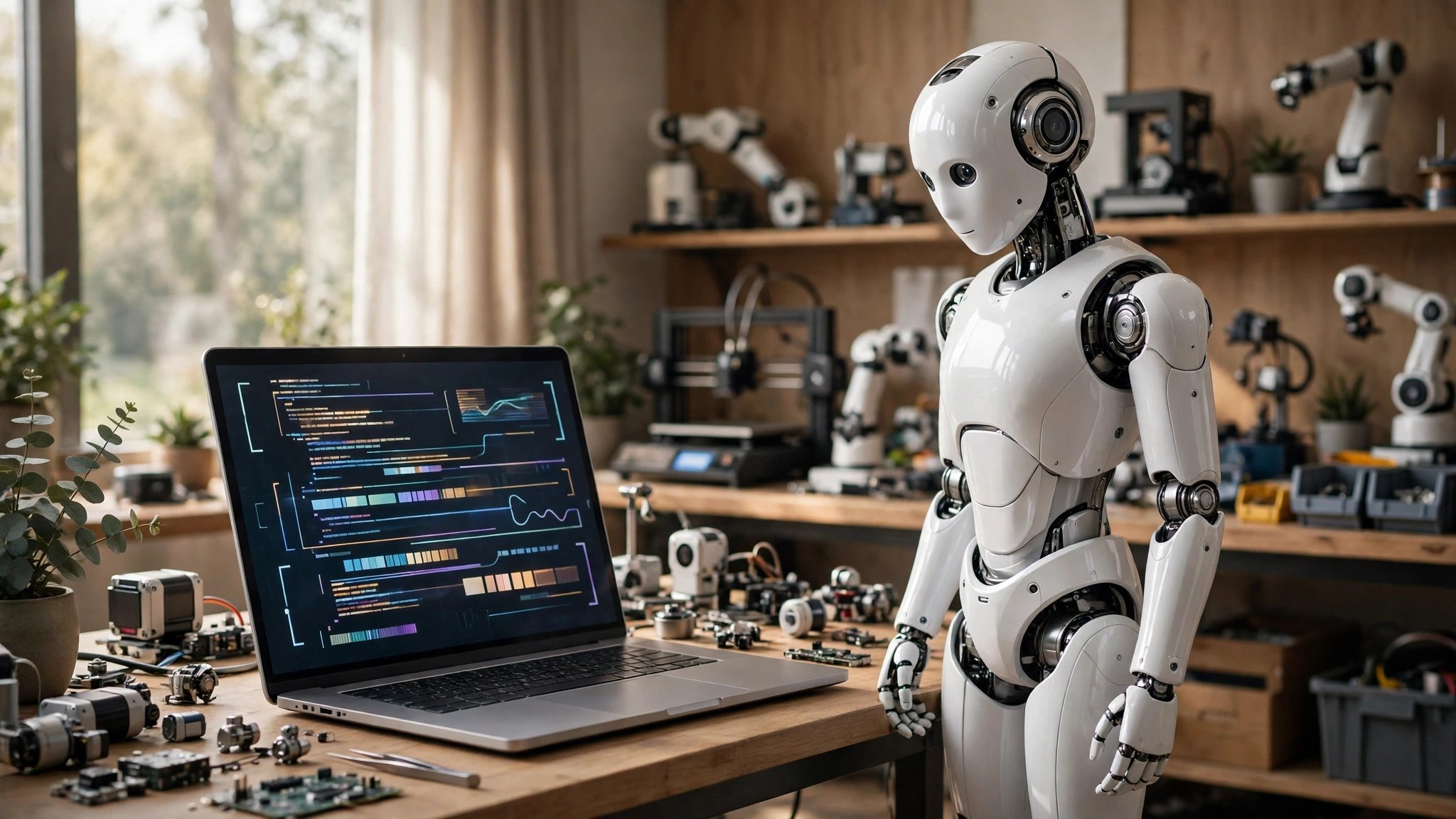
OpenAI has disbanded its robotics team. Again. Fortune confirmed it on Friday, November 13: the stand-alone robotics team is gone, its researchers reassigned. The research side now sits inside OpenAI's main research team, reporting to Chief Research Officer Mark Chen. The applied robotics and hardware people moved into the larger Applied organisation, under President Greg Brockman.
I have not seen an OpenAI blog post about this, because there isn't one. The company has published nothing of its own about the change, and it has not said how many people were affected. Everything below comes from Fortune's reporting and the coverage around it.
🔍 How we put this together
We verified the story against Fortune's exclusive (confirmed to Fortune on 13 November 2026) and the corroborating coverage listed at the end, keeping every study figure, cost and latency number labelled as reported, not independently verified. We have not run any robot or model ourselves, so nothing here is a hands-on finding. Where the reporting gives no number or definition, we say so.The bet: the model is the robot now
OpenAI's stated reason is simple, and honestly, it is the kind of claim that sounds obvious until you sit with it for a minute. General-purpose frontier models, including GPT-6 Astra, can now be applied to robots directly. So a separate team building robot-specific models is no longer the best way to move fast.
An OpenAI spokesperson told Fortune that robotics remains core to the company's long-term vision, that it is still committed to bringing general-purpose robots into the world, and that a humanoid demo is still targeted for 2027. So this is not OpenAI walking away from robots. It is OpenAI saying the robot work now happens inside the general model work.
The evidence OpenAI is pointing to is a study Nvidia ran on October 14. Researchers used GPT-6 Astra as a robot controller on RoboLab-120, a simulated pick-and-place benchmark, with no special robot training at all. It scored 74.8% success. The best dedicated robot model, Lakeside, scored 51.0%.
Read that again. A general model, zero robot training, beating a purpose-built robot model by more than 20 points. If you squint, it looks like the moment the dedicated robotics team became redundant.
The caveats, and they are big ones
I would not take that number at face value, and neither should you:
- It was a simulation, not a physical robot. RoboLab-120 is a simulated benchmark. A simulated gripper does not drop things, does not deal with a wobbly table, does not have a cable snagging on a chair leg.
- It was one benchmark. Pick-and-place is the hello-world of manipulation. It says nothing about the messy, long-horizon tasks a real robot has to do.
- It was slow and expensive. Per other coverage of the same study, each attempt cost around $36.40 in tokens, and each model call took about 18.56 seconds. A robot that thinks for 18 seconds before each move is not a robot you can ship. That is a research demo's cost profile, not a product's.
So the honest version is this: a general model beat a dedicated model on one simulated test, at a price and latency no real robot can afford yet. That is a real signal. It is not a solved problem.
The roboticists are not buying it
This is the part of the story that matters most, and it is the part the headline skips. Roboticists are pushing back on the idea that general models have solved embodied intelligence. Guanya Shi of Carnegie Mellon University's Robotics Institute is among those disputing the claim. The argument, roughly, is that running a model in simulation and controlling a physical body in a physical world are different problems, and a benchmark score does not close that gap.
I think the sceptics have the stronger hand here, at least for now. Simulation results have a long history of looking better than reality. The $36.40 and 18.56-second numbers are doing a lot of quiet work in this story: they are the difference between a model that can pick up a block on a screen and a robot that can pick up your mug without breaking it.
This is the second time
OpenAI has done this before, which is worth knowing:
- 2020: OpenAI wound down its first robotics team. Wojciech Zaremba, who led it, pointed to limited robot data as a constraint.
- 2024: The team was rebuilt as a stand-alone group, with a partnership with Figure.
- February 2025: The Figure deal ended.
- November 2026: The stand-alone team is disbanded again, folded into main research and Applied.
That is two disbandments in six years. The first time, the constraint was data. This time, the claim is that the constraint is gone, because the general model is good enough. The sceptics would say the constraint just moved somewhere else: latency, cost, physical reliability, all the things a benchmark does not measure.
Who should care, and who should wait
- Watch closely if: you build on robot foundation models or VLA stacks. If OpenAI is right that general models absorb robot control, the dedicated-model layer you build on may get thinner. If the sceptics are right, the dedicated layer is where the real work still happens.
- Wait if: you are waiting for a humanoid you can actually buy. Nothing changes this week. The 2027 demo target is still on the table, per OpenAI, but a demo is not a product, and a disbanded team with a demo target is a thinner promise than a team with a demo target.
- Run the test if: you work in embodied AI research. The experiment that decides this argument is whether GPT-6 Astra's RoboLab-120 result replicates on physical hardware, at usable latency and cost. It has not happened yet.
- Do not restructure on a benchmark. One simulated test is a reason to run your own physical-robot test. It is not a reason to skip it.
The honest caveats
- All study figures are as reported. The 74.8% vs 51.0% RoboLab-120 scores, the ~$36.40 per-attempt cost and the ~18.56-second per-call latency come from the Nvidia study and the coverage around it. None of it has been independently verified, and none of it was measured on a physical robot.
- OpenAI has said nothing itself. There is no OpenAI blog post about the change, and the company has not said how many people were affected. The org-chart details (Mark Chen, Greg Brockman) and the stated reason come from Fortune's reporting.
- The expert disagreement is real and unresolved. Roboticists, including Guanya Shi of Carnegie Mellon, dispute that general models have solved embodied intelligence. This article does not pick a winner; it reports both sides.
- No hands-on testing was performed for this article, and no benchmarks, prices or dates have been invented.
What I would actually do
Nothing this week, and I would not restructure any robotics roadmap on the strength of one simulated benchmark. If you are building in this space, the test to run is the obvious one: take the general model, put it on a physical robot, and measure the latency and the failure rate on a task that matters to you. The 74.8% number is a reason to run that test. It is not a reason to skip it.
The question that will decide whether OpenAI made the right call is simple: does the general model keep winning once the robot is real, the clock is ticking, and the bill is being paid? I do not think anyone can answer that from a simulation.
Have you worked with a general model as a robot controller, in sim or on hardware? I would genuinely like to hear whether the latency and cost numbers match what you have seen, because that is the part no press report can settle.
Sources: Fortune, "OpenAI disbands robotics team" (exclusive, confirmed to Fortune on Friday, November 13, 2026); explainx.ai, "OpenAI Disbands Robotics Team: GPT-6 Astra Robots" (explainx.ai/blog/openai-disbands-robotics-team-gpt-6-astra-robots-fortune-2026); madrobot.blog, "OpenAI Disbands Robotics Team, Bets on GPT-6 Astra" (November 13, 2026); aiweekly.co, "OpenAI Folds Robotics Team Into Main Research and Applied Orgs" (aiweekly.co/alerts/openai-folds-robotics-team-into-main-research-and-applied-orgs). The RoboLab-120 figures (74.8% vs 51.0%), the ~$36.40 per-attempt cost and ~18.56s per-call latency, and the 2020/2024/February 2025 history are as reported in that coverage. OpenAI has published no blog post of its own about the change and has not said how many people were affected. All vendor and study claims are attributed, not independently verified. This breaking article is not the daily buyer-intent post, and it contains no affiliate links.